
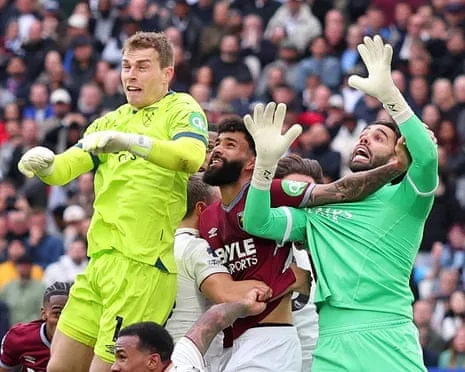
Howard Webb has praised the VAR process that led to the disallowance of West Ham’s equalizer against Arsenal on Sunday, stating that Pablo’s foul on goalkeeper David Raya was “clear and obvious.”
Chris Kavanagh, the match referee, made what has been described as one of the most critical decisions in VAR history by overturning Callum Wilson’s late goal at the London Stadium, giving Arsenal an advantage in the title race. Webb, the chief officer of the Professional Game Match Officials (PGMO), did not criticize Kavanagh for missing the initial foul but argued that it was inevitable for the VAR to step in.
Speaking on the program “Match Officials Mic’d Up,” Webb noted that PGMO had specifically warned players at the start of the season about the type of infringement Pablo committed. “Is it a foul on the goalkeeper? Categorically, yes,” Webb said. “We’ve stressed all season, including in pre-season briefings, that if a goalkeeper is impeded by an opponent grabbing or holding their arms, preventing them from doing their job, it will be penalized. This isn’t about general contact with goalkeepers; it’s about specific interference with the goalkeeper’s arms or hands that stops them from functioning.”
He added: “When you see the best angle, it’s clear that’s what Pablo does. On video, it’s obvious and happens early. Even though it wasn’t clear and obvious to the referee because of the crowded penalty area, once the VAR saw it, they had to get involved.”
Webb also highlighted the diligence of the VAR team, Darren England and assistant VAR Akil Howson, who were aware of the significance of the moment. The review process took over four minutes. “They went through the process diligently because they respect the game and understand the importance of the situation,” Webb explained. “We need to take time to get it right in such a crucial moment. They did, and the offense was correctly identified, leading to the VAR recommending a review. They examined the whole play, not just the isolated incident, and identified the foul that needed to be penalized.”