

It has been over a year since the top 20 ATP and WTA players first sent a letter to the four Grand Slam tournaments, demanding discussions on increased prize money, player welfare, and stronger representation. 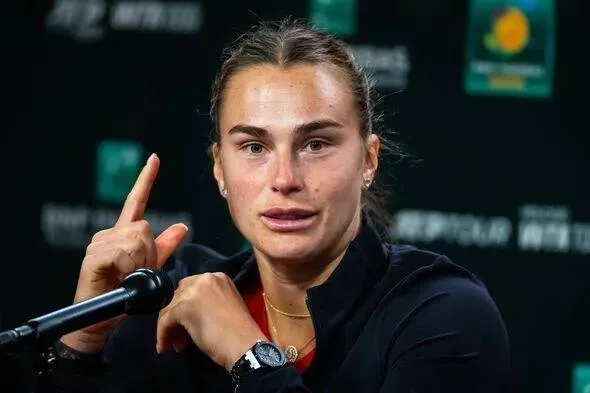
With the French Open’s salary increase falling far short of players’ expectations, more athletes are voicing their opinions at interviews in Rome. As the conversation shifts from “speaking out” to “taking action,” some divisions are emerging.
The most resolute stance comes from Aryna Sabalenka. She openly stated that if necessary, players could unite to boycott Grand Slams—the most important, commercially valuable, and star-studded stages in tennis.
“Let’s see how far we can go. If it comes to players boycotting, I think right now we girls can unite to do this because I feel some things are really unfair to players. I think sooner or later it will come to that,” Sabalenka said.
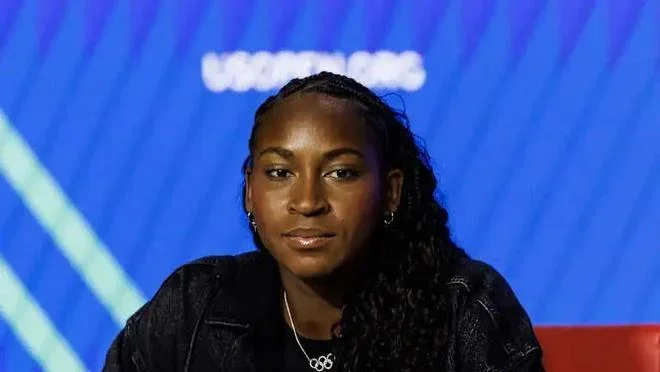
American player Coco Gauff sided with Sabalenka, but only “if everyone can stay united and work together.” In her view, it’s not just about top players’ self-interest but about the future of the entire professional system, especially for lower-ranked players who depend solely on prize money and cannot rely on sponsorships.
“When you look at the top 50 to top 100, or top 50 to top 200 players, and see how much each Grand Slam earns, it’s heartbreaking. Many of the best 200 tennis players live paycheck to paycheck, and you don’t see that in other sports,” Gauff said.
While we often see top stars flying private jets, landing luxury endorsements, and earning millions in prize money, many professional players still struggle to make ends meet below the pyramid. As “one-person companies,” players must bear all operating costs, including coaching staff salaries, global travel, court training, and recovery logistics.
Compatriot and current American No. 1 Ben Shelton focused on the issue of “participation rights.” “For us players, we should at least have a chance to be part of these discussions. That’s something our sport has lacked, especially in Grand Slams, and it’s probably the most disappointing part.”
However, when asked about “boycotting Grand Slams,” Shelton became cautious. He wasn’t sure if it would ever reach that point. In fact, that’s the attitude of most players—the dissatisfaction is real, but they still hope to resolve issues through communication rather than direct confrontation.
Iga Swiatek echoed similar views: “The most important thing is to have full communication and discussion with the governing bodies so we can have room for dialogue and negotiation. I hope there can be such meetings before the French Open starts, and see how it goes.”
On the other hand, Emma Raducanu clearly opposed a boycott, saying she would not participate in any such action. In an interview with The Guardian last year, she described professional players as “high-income workers,” arguing that since they receive generous rewards, they should accept demanding schedules.
This perspective isn’t surprising, especially for younger players with high commercial value who are more dependent on the current system and less willing to take risks associated with change.
Jessica Pegula, who previously led the WTA’s reform schedule group, also ruled out the possibility of a strike in earlier interviews. After all, it’s the Grand Slams—the stage every tennis player dreams of since childhood.
Elena Rybakina’s remarks were notably honest: “There have been many times in the past when players could have united to boycott, but it never happened. Honestly, I don’t know. If most players decide to boycott, I’ll join, no problem.”
This “follow the crowd” attitude may represent the majority. Beyond recognition and support, the collective “salary movement” in tennis requires firm execution.
Top players are making efforts, but can they do more? Gauff suggested that current players learn from the WNBA’s successful salary increase experience by forming a union to negotiate with event organizers.
In fact, players have attempted to establish an organization to protect their rights. The Professional Tennis Players Association (PTPA) filed an antitrust lawsuit last year, but notably, no top-ranked players were among the 12 plaintiffs—mostly lower-ranked singles players, doubles specialists, or retired athletes.
In other words, while some top players chose to “negotiate” with the four Grand Slams through a joint letter last year, the PTPA opted for direct confrontation through litigation. A year later, progress seems minimal.
As a result, the Australian Open organizing committee reached a settlement with the PTPA in December last year. On the same day, the French Open, Wimbledon, and US Open committees jointly filed a motion to dismiss the lawsuit.
According to the Associated Press, Novak Djokovic’s signature did not appear on the latest joint statement from top male and female players.
Djokovic has been one of the most active advocates for player rights in tennis over the years. But reality has proven that even the most influential superstar struggles to truly unite the entire professional tennis world on the same front.
At 38, the Serbian’s energy no longer supports endless rounds of mediation. Younger players need to find their own solutions.
Tennis players share common interests, but they struggle to form unified action at critical moments. Players at different rankings, commercial values, and career stages have vastly different risk tolerances. For top players, a boycott means giving up glory and exposure; for lower-ranked players, who would actually boycott a Grand Slam?
Thus, when the question “should we boycott Grand Slams” is repeatedly raised, it tests not only the relationship between players and tournaments but also the trust and consensus among players themselves.
Many argue that even if tennis players could truly unite, they would still need to separately confront four Grand Slams, ATP, WTA, and ITF—multiple independent bodies. Compared to highly centralized professional leagues like the NBA or NFL, tennis’ power structure is more fragmented, communication costs are higher, and reform progress is naturally more difficult.
Yet, tennis has also accomplished things many thought “impossible.” Equal prize money for men and women is the most classic example.
From the US Open leading the push for equal prize money to the eventual full implementation across all four Grand Slams, it involved long negotiations, confrontations, and collective pressure.
As Billie Jean King, played by Emma Stone in the film, once told the tennis association head: “If the best athletes in the world don’t play, then the Grand Slams aren’t grand.”
In a way, that statement still applies to professional tennis today.
Whether through boycotts and strikes or more mature negotiation mechanisms, these are paths already proven in other professional sports. But for current professional tennis, players still have a long way to go before achieving mature, stable, and executable collective action.
This is the labor-management game in professional sports: tournaments need stars to create value, players want to share more revenue; governing bodies seek to maintain the existing order, while athletes constantly pursue greater influence. How will this story end amidst the tug-of-war between commercial interests and professional ideals?